Good technology starts with understanding the complexity of your work.
Together, we decide where it can help.
For small businesses, practices, and community organizations where one person holds it all together.
We help you decide which tools to keep, what to buy, and what needs to be built or connected. If you'd rather not use AI at all, we'll help you protect your systems and your business from it. Start with a free half-hour call about where your work gets stuck.
Replies usually arrive within two business days.
A pricing question that turned into a tool.
Alan and Heather Rusche make soap and skincare products at Rising Phoenix Ranch. Their prices did not include their own time, and they were selling wholesale without a wholesale price.
We worked through their products, batch sizes, hours, and packaging costs, then built a tool that calculates what each item costs to make and suggests retail and wholesale prices. It warns them when a price would lose money.
The tool runs on Heather's phone, saves her changes there, and gives her a backup file to keep. After trying the first version, she wrote back:
“We have figured out we have to raise our prices on lotion and soap!!”
She uses it every day.
What does stuck look like?
Usually something ordinary that costs more time or money than it should.
- You know the business makes money, but you can't tell what each product actually earns.
- Holiday orders mean working out shipping by hand, one order and one address at a time.
- Someone spends hours copying the same information from one system into another.
- Client details arrive by email, get typed into another system by hand, and nobody is sure where every copy ends up.
- Your staff already use AI tools, and nobody has decided what information is safe to put into them. Our free checklist is a good first step.
- You know you should be selling online, but you're not sure what that takes or what to buy.
Those are the kinds of problems we start with. We learn how the work actually gets done, then decide whether technology belongs there at all.
Not sure where to start? Run the checkup.
Most small operations run on a spreadsheet, an inbox, and one person who remembers how it all connects.
The software was bought for a different job. The spreadsheet answers some questions slowly and others not at all. Decisions from client calls live in someone's memory until they are needed, and by then the details have drifted.
That describes a lot of makers, practices, agencies, community organizations, and solo professionals with customers and repeatable work. Some are about to buy a large platform and suspect it will not fit.
Mission First works on the operational problem: getting the process out of one person's head and into a tool your team can use.
See how we helpFirst, we learn how you work. Then we find what fits.
Mission First identifies where the work is stuck, recommends which tools would help and which would not, and builds or connects the ones that fit.
A written recommendation you can use.
After a working session, you receive a written recommendation: where the work gets stuck, which tools to keep, what to buy, and what would need to be built or connected. The recommendation is yours to keep and use whether or not we build anything. Anything we would build comes with a fixed price before work starts.
The answer isn't always another tool. We may recommend simplifying the way you already work, setting a policy before new technology is used, or deciding that AI doesn't belong in this part of your work at all.
When a tool is the answer, it might be a calculator, a tracker, an intake flow, a dashboard, or a connection between tools you already use. We look at extending what you have before replacing it. Before anything runs, you receive an explanation of where your information will be stored, who can access it, and which services the tool uses.
What happens after you write.
-
You send a message.
A few lines about your work and what keeps getting stuck. If you are not sure which tools are in use, that is a normal place to start.
-
We talk for half an hour, free.
Michelle comes to the call having read what you sent. Together we decide whether a working session makes sense.
-
We agree on the work in writing.
The working session, the written recommendation, and any build are separate work that follows the free call. Each begins only after you have agreed to the scope and price in writing.
Who you'd be working with.
You work directly with Michelle Fradin at every step.
People are the whole point. The technology serves them or it doesn't belong here.
- Twenty years inside nonprofits, small businesses, farms, and farmers markets
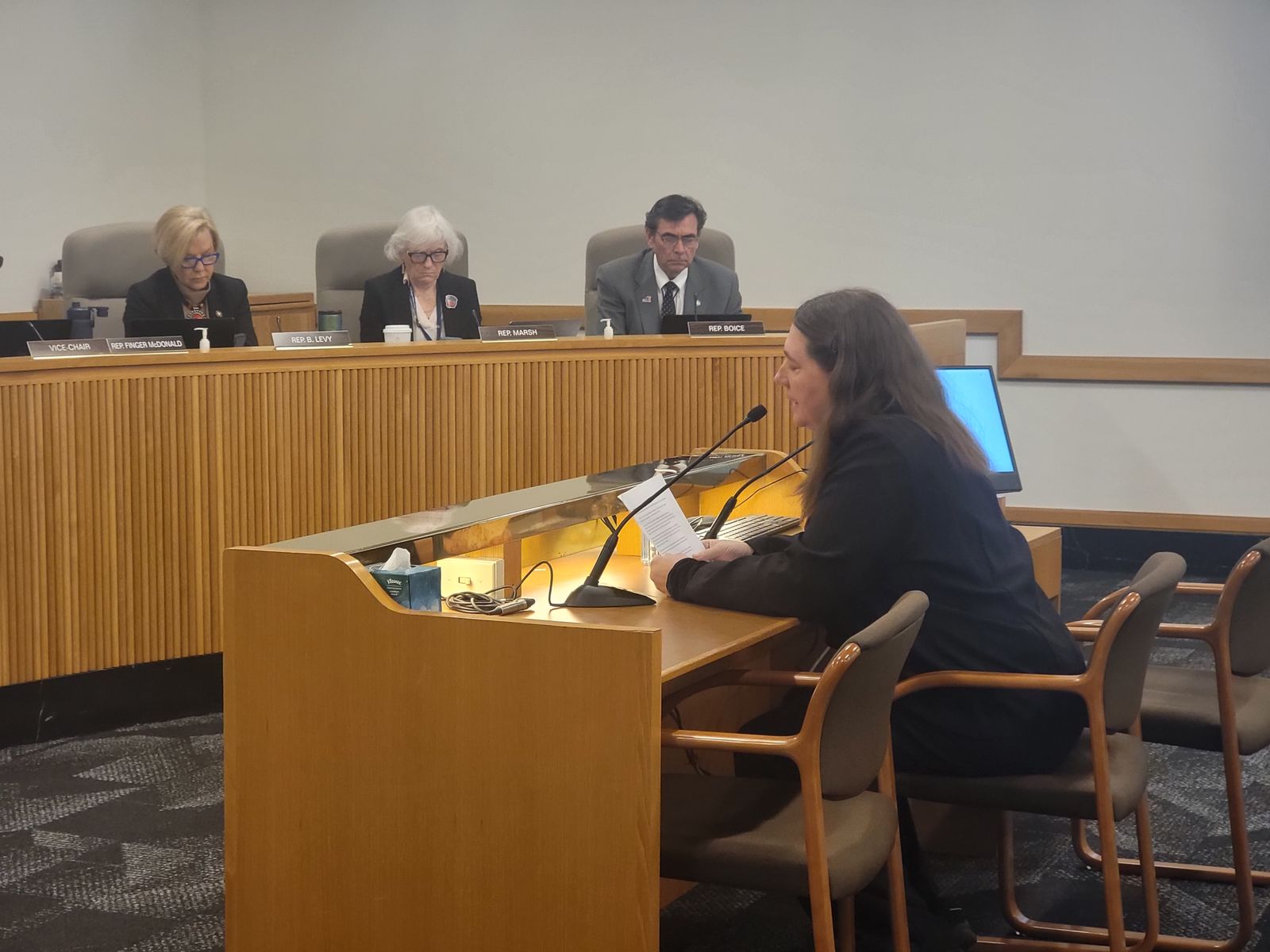
- Testified before the Oregon Legislature in 2025 in support of HB 3372, which lets small growers water up to half an acre of crops for sale from a household well
- Former president of the Oregon Farmers Market Association
- Based in Southern Oregon's Illinois Valley
Michelle Fradin
Michelle has spent two decades inside nonprofits, private companies, community groups, farms, and farmers markets, most of them trying to reach more people with less. She has been in the rooms where decisions get made and has watched what happens when nobody asks the hard questions in time.
She came to AI from the work, because she saw what was coming for the organizations she cares about. The people talking about AI at the time had never worked a market day, and nobody was thinking about where the data went.
She knows how these organizations run and what their information is worth, and builds tools that fit the first and respect the second.
Start without talking to anyone.
You don't need to be adopting new technology to use these. ToolMap helps you see what your organization already relies on, and the security checkup helps you spot where information may be exposed. If your staff are already using AI tools, the chatbot checklist gives you a practical place to start.
-
Checkup
ToolMap
List every system you pay for and see where they overlap. You leave with a plan for what to keep, replace, or retire.
-
Checkup
Security checkup
A plain-language security self-assessment. Where you are exposed and what to fix first. No tech background needed.
-
Checklist. About 6 minutes
Before your team uses a chatbot
The settings to change, the things never to paste, and how to tell your staff. Run it once per tool.
Send a message.
Tell us a little about your organization and what prompted you to write. Michelle reads every message personally.
hello@missionfirst.ai